Mr.Huang: It has been over 20 years since you entered the IVD industry and developed the 5-part hematology analyzer. What changes and constants have you observed in the Chinese or global hematology analyzer market over these two decades?
Dr. Jianjun Chu : People generally believe that hematology has matured, so many hematology techniques or principles are readily adopted. However, there are almost no manufacturers in China that derive their technology from fundamental theoretical analysis.
Mr.Huang: Dr.Chu, can you explain the technical routes in the global hematology analyzer market? How do they differ from the currently mature technologies of Mindray and Sysmex?
Dr. Jianjun Chu: In the past 20 years, several major companies have been involved in hematology analyzers globally:
Beckman Coulter (USA): They are the pioneers of hematology, using VCS technology - V: DC impedance, C: radio frequency, and S: laser light scatter. They classify cells using electrodes, radio frequency, and laser scatter.
Abbott (USA): They use multi-angle polarized light scatter and have been the most advanced in terms of technology. Years ago, they used argon-ion lasers and did extensive work with fluorescent markers and channels. Despite having excellent technology, Abbott’s instruments ultimately failed because their engineering was not well-executed, leading to a loss of market share. In my opinion, their technology is the best.
Siemens (Germany) (formerly Bayer): They use light absorption and scatter for cell classification. Bayer’s issue was also poor engineering. They lagged in fluorescence technology. Bayer’s best legacy is the nine-plot RBC analysis.
Horiba (France) (formerly ABX): Their optical principles are similar to Bayer’s. They failed due to poor engineering and were eventually acquired by Horiba, who also struggled to make it successful.
Mindray (China): They follow Sysmex’s technical route.
Dymind (China): They have been in the field for over a decade.
In terms of technology, Sysmex, Abbott, and Mindray are in the top tier. Abbott has great technology but faces challenges in engineering implementation, resulting in high instrument costs and issues with stability and reliability, making their products less competitive. Sysmex succeeded because they excelled at combining technology and engineering.
Mr.Huang: What are some unresolved issues and areas worth exploring in hematology analyzer technology?
Dr. Jianjun Chu: For example, precise platelet counting remains a challenge. Platelets are very active and tend to aggregate and activate during sample transport. There’s also the issue of methodology. No method is perfect; each has its advantages and limitations.
Mr.Huang: Nature has many secrets yet to be uncovered, leading many researchers to continue exploring. Regarding human blood and related diseases, what areas still warrant continuous research investment?
Dr. Jianjun Chu: I’m not a biologist, but based on my years of R&D experience, I believe many biomarkers in serum and even blood cells are yet to be discovered. The biomarkers we have found need to be realized through engineering technology. In IVD engineering, we must consider key indicators such as the concentration and scale of the detected substance. Different concentrations and scales require corresponding detection methods. For concentrations, picogram and femtogram levels can be achieved using single-molecule immunoassay and chemiluminescence techniques. For nanogram levels, biochemical and luminescence methods are suitable. There’s also the issue of scale: small molecules, large molecules, nano-level, micron-level, and cellular-level substances require different detection techniques like sequencing, mass spectrometry, bioassays, and flow cytometry. Engineers address the measurement and detection of substances at various concentrations and scales. The diversity of detectable substances leads to diverse detection methods and products, which is a notable characteristic of IVD compared to other medical devices.
Looking deeper, the question is how to discover these biomarkers. Without new biomarkers, we can only continue refining existing projects. Many entrepreneurs are working on single-molecule immunoassays and other technological routes, but they are essentially solving engineering problems rather than innovating. Using single molecules or digital PCR are just different techniques for detecting markers; there’s no real mystery there.
Mr.Huang: What are your technical advantages?
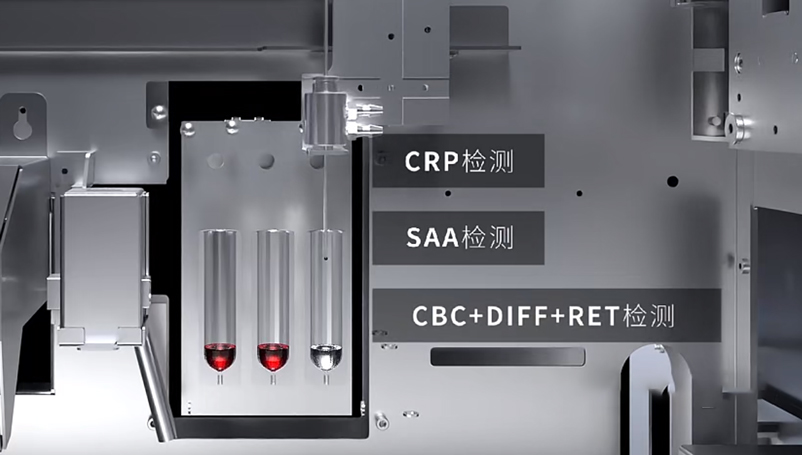
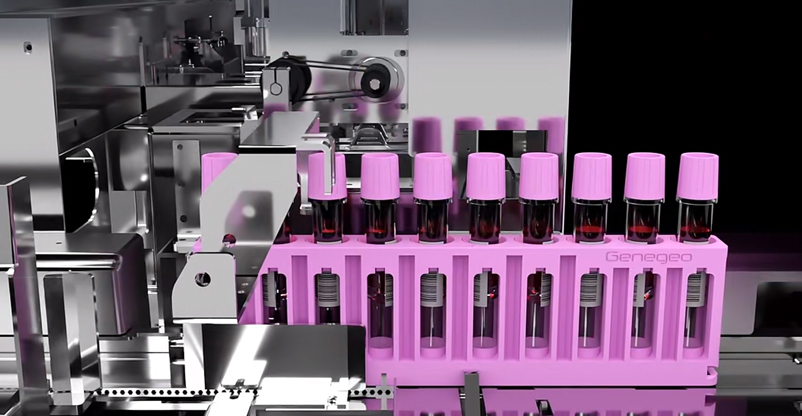
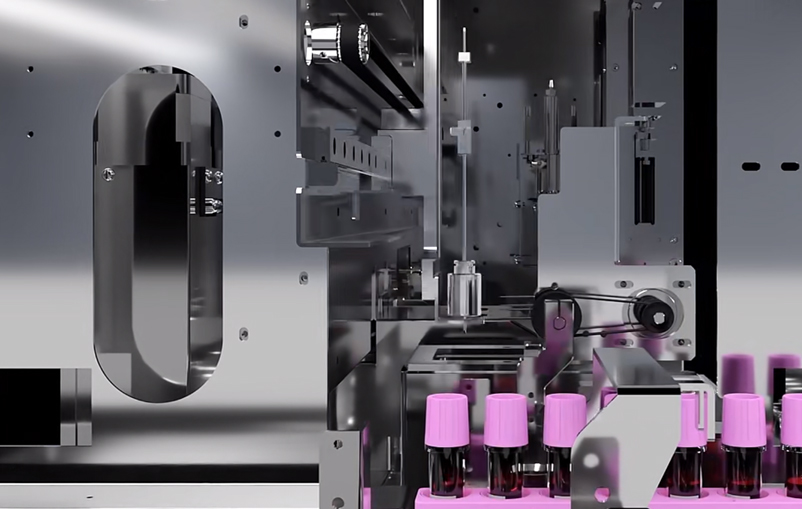
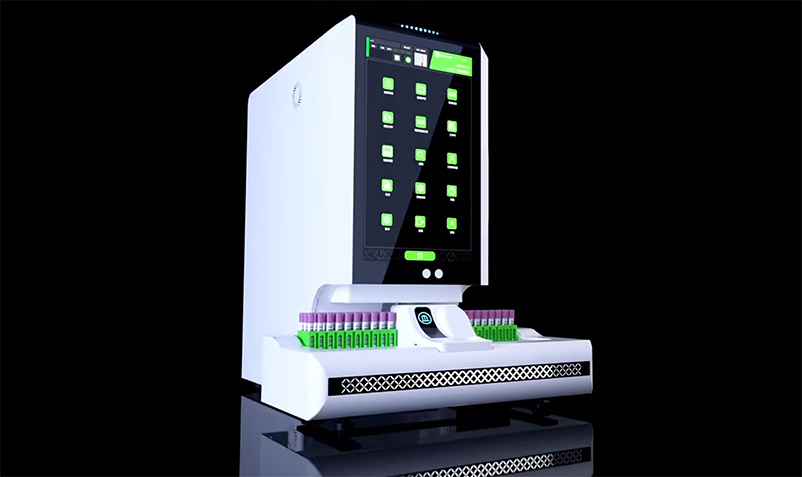
Dr. Jianjun Chu: Our fully automatic hematology analyzers are based on nucleic acid fluorescence staining and latex-enhanced immunoturbidimetry, enabling early screening and diagnosis of common diseases like leukemia, malaria, infections, and hematological disorders at an advanced international level. Our core R&D team has over 20 years of experience in IVD, mastering sheath flow technology, laser scatter technology, and fluorescence staining, covering fields like hematology, immunology, microbiology, and biochemistry. Our products include fully automatic hematology analyzers with CRP and SAA analysis, fully automatic specific protein analyzers, high-end hematology analyzers, and supporting reagents, all with proprietary intellectual property rights.
Our principle for instrument development is to start from hematological diseases and related conditions and identify the biomarkers to be detected. If chemiluminescence is the best technique for a certain marker, we use it; if biochemistry works better, we use that. For example, for the infectious markers CRP and SAA, we use biochemical methods and integrate these items into our hematology analyzers.
Mr.Huang: What have you done and plan to do regarding globalization and overseas markets?
Dr. Jianjun Chu: We are actively considering globalization as an excellent market strategy and a key focus. We have already signed a contract with a distributor in Russia. We are negotiating with a distributor in France, currently conducting testing and verification, and will sign soon. We have conducted strong market promotion in Africa, Southeast Asia, and India. Due to the advantages and features of our products, user recognition is high, making our market penetration quite effective.