In the field of molecular diagnostics, accurately quantifying viral RNA is key to understanding the mechanisms of viral infections and evaluating the effectiveness of treatments. In recent years, digital PCR (dPCR) technology has shown great potential in virus detection due to its high sensitivity and precision. Today, we will delve into a recent study that developed a human rhinovirus (RV) RNA reference material using digital PCR technology, providing a new standard for viral load detection.
🌟 Background of the Study: Challenges of Human Rhinovirus
Human rhinovirus (RV) is a positive-strand RNA virus that primarily causes respiratory illnesses, affecting both the upper and lower respiratory tracts. RV infections often co-occur with other respiratory viruses and can remain asymptomatic in the body for extended periods. Therefore, accurately quantifying RV RNA is crucial for studying the relationship between viral load and infection symptoms. However, traditional RT-qPCR methods have some limitations in quantitative analysis, such as susceptibility to contamination, limited dynamic range, and sensitivity constraints.
🔍 Advantages of Digital PCR Technology
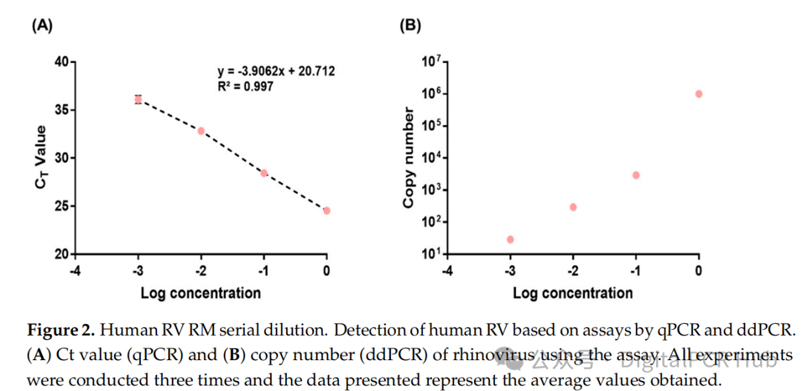
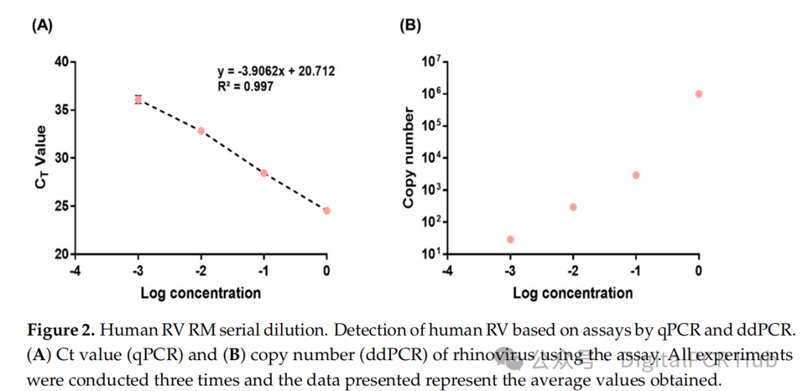
Digital PCR technology works by partitioning the sample into thousands of small reaction units, each undergoing PCR amplification independently, thus enabling single-molecule level detection. This method minimizes the impact of standard curve variability, PCR efficiency, and primer-probe mismatches on quantitative results, offering higher quantitative accuracy. In this study, researchers utilized reverse transcription droplet digital PCR (RT-ddPCR) technology to successfully prepare RV RNA reference materials.
🛠️ Preparation Process: From Virus Cultivation to Reference Material
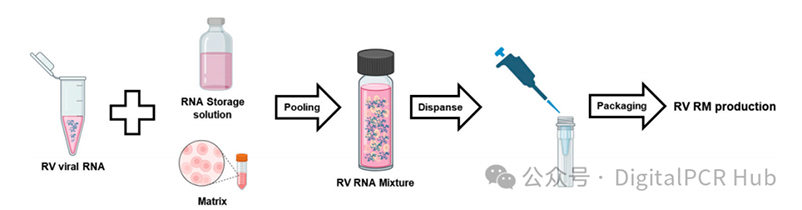
The researchers first infected host cells with RV, extracted the viral genomic RNA, and used RT-ddPCR technology to determine the viral genome copy number. The samples were then diluted to approximately 1.6 × 10^5 copies/µL, resulting in the preparation of over 300 vials of RV RNA reference material. Each vial contained 100 µL of the positive material and was immediately stored at -80°C.
📏 Stability and Homogeneity Testing
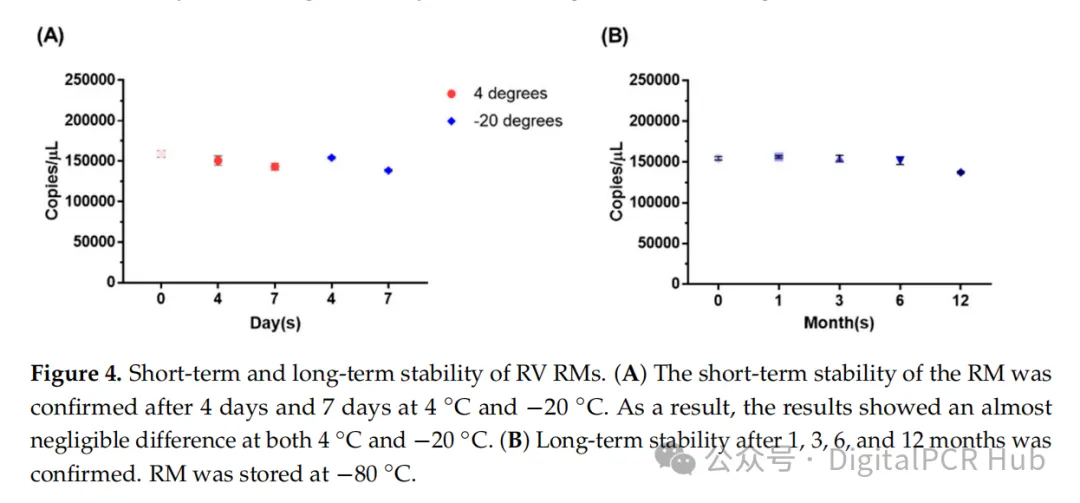
To ensure the reliability of the reference material, the researchers conducted rigorous stability and homogeneity tests. The results showed that the RV RNA reference material exhibited negligible changes in copy number when stored at 4°C and -20°C for up to 7 days. When stored at -80°C for up to 12 months, there was a slight decline in copy number, but the changes remained within the uncertainty range, indicating relative stability. Additionally, after undergoing three freeze-thaw cycles, the changes in copy number were within acceptable limits, demonstrating the reference material's stability during repeated use.
📈 Application Prospects: Enhancing the Accuracy of Molecular Detection
The RV RNA reference material developed in this study not only provides precise reference values for RV molecular detection but also helps improve the accuracy and reliability of other molecular detection methods. By offering reference values for absolute copy numbers, these materials can serve as standards for various research and diagnostic tests. Moreover, they can be used to develop user-friendly PCR-based diagnostic test kits, enabling rapid responses to future respiratory disease pandemics.
🔬 Research Significance: Advancing Virology Research
Through this study, we can gain a deeper understanding of the relationship between RV and other respiratory diseases and explore its applications in clinical diagnosis and treatment. Additionally, this work lays an important foundation for the development of antiviral drugs and vaccines targeting RV.
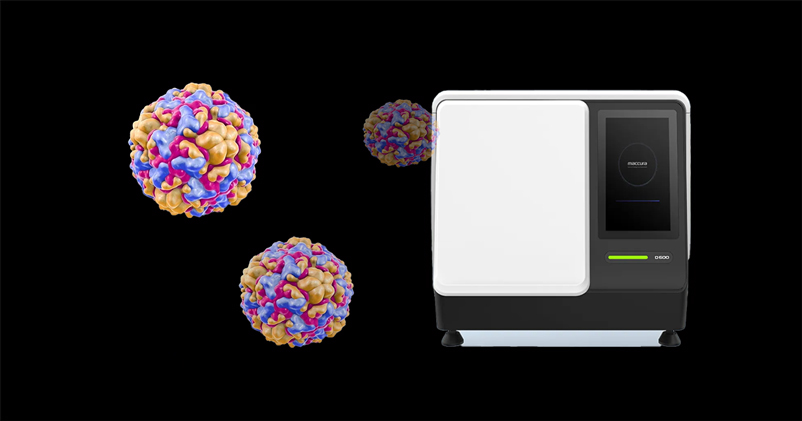
The foundation of digital PCR quantification lies in precisely controlled picoliter-scale single-molecule compartmentalization technology, primarily achieved through microfabricated compartmentalization and microdroplet compartmentalization techniques. Both rely on precisely engineered single-use microfluidic chip consumables.
In droplet microfluidic chip systems, the capillary number (Ca, the ratio of viscous resistance to interfacial tension) is a key dynamic constant influencing microdroplet formation. Droplet formation is often limited by the viscosity or surface tension of the system.
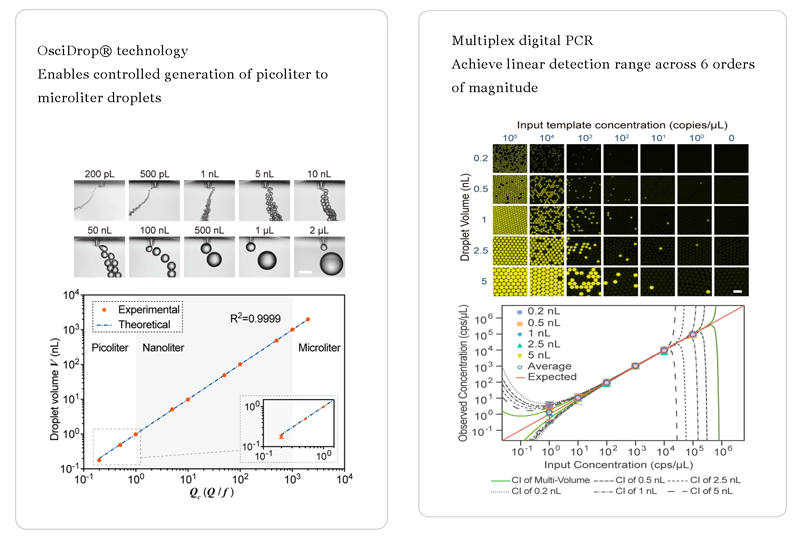
The OsciDrop® technology cleverly uses high-frequency asymmetric vibrations to uniformly segment the liquid samples expelled from the pipette tip into microdroplets ranging from picoliter to microliter volumes within an oil phase.
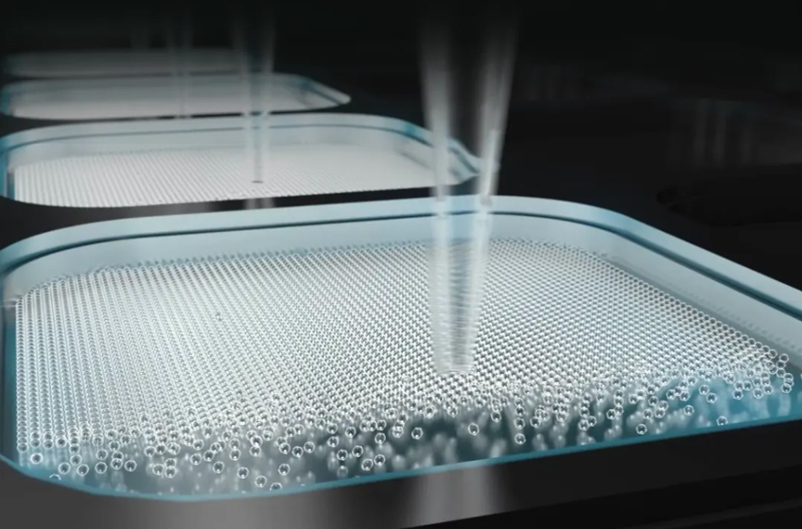
When generating droplets using OsciDrop® technology, the contribution of the Weber number (We, the ratio of inertial forces to surface tension) is over two orders of magnitude higher than that of the capillary number. Therefore, OsciDrop® technology represents a novel droplet generation mechanism dominated by the Weber number.
Based on this mechanical model, the MGI Bio automated digital PCR analysis system optimizes droplet generation conditions. Using only injection-molded sample tips, it flexibly achieves droplet preparation ranging from 200 pL to 2 µL across five orders of magnitude. This allows the detection range to span six orders of magnitude, breaking the limitations of fixed droplet quantity and volume in conventional chip methods for the first time. By utilizing a variable volume partitioning droplet array, the dynamic detection range of digital quantitative PCR is improved by 10-100 times.
The enhancement in sensitivity provides a more precise detection tool for clinical applications, expands the range of detectable scenarios, and offers medical experts new diagnostic tools and standards, thus redefining diagnostic strategies.
The digital PCR platform has now developed over 30 research reagent products, covering fields such as oncology, prenatal and postnatal care, and pathogen detection. It also offers customized reagent services to meet the detection needs of various application scenarios, including clinical diagnostics, research, disease control, and food safety.