The core competitiveness of high-precision scientific instruments stems from continuous breakthroughs and innovations in key technologies. Every advancement in optical microscopy has significantly driven our understanding and exploration of the microscopic world. Applied in fields such as cytology, histology, electronics, and microscopy, microscope magnification can typically reach around 1500x, clearly revealing the shapes and structures of tiny organisms such as bacteria.
In the high-end market of life science instruments, no Chinese companies are currently among the top 20 global leaders, which include Thermo Fisher Scientific and Danaher. For high-end digital microscopes, the current mainstream technological approach relies on mechanical scanning and stitching to achieve wide-field imaging. However, challenges such as imperfect imaging results, complex sample preparation processes, stitching errors or failures, and defocusing in thick samples and live imaging significantly limit their application in clinical and broader fields. This technology is also heavily dependent on hardware such as high-magnification objectives, precision-controlled systems, and high-speed cameras, leading to high overall system costs.
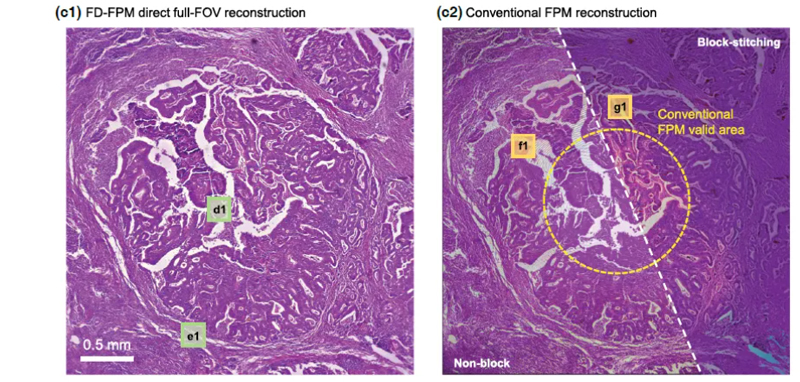
Leveraging Fourier ptychographic microscopy (FPM), a large-field, high-resolution, ultra-depth-of-field, intelligent digital imaging analysis platform is set to be launched soon.
Dr. PanAN designed an FPM system based on hemispherical digital condenser illumination. This system, which combines Fourier ptychography algorithms with the unique design of the hemispherical digital condenser, significantly enhances the numerical aperture (NA) of the imaging system. The higher the NA, the more detail the system can capture, resulting in higher imaging resolution. With an NA of 1.05, the FPM system boasts extremely high light collection efficiency and image clarity, approaching or even matching the resolution levels of oil-immersion objectives, as well as other performance indicators like field of view and space-bandwidth product.
Achieving 4-Second Rapid Imaging with Applications in Three Key Fields
The brilliance of the FPM system lies in its architecture, which is similar to traditional optical microscopes but with a revolutionary LED array replacing the light source. By precisely arranging the LED lighting sequence, the system captures richer and more comprehensive image information from various angles of illumination. By integrating phase retrieval and aperture synthesis algorithms, hundreds of images are layered and reconstructed, resulting in a high-resolution image that surpasses the inherent resolution of the objective lens while maintaining a wide field of view.
In the field of basic research, XG Instruments has developed a "panoramic long-term label-free live-cell imaging analyzer," tailored for cutting-edge research in stem cells, microbiomics, and spatial genomics. This instrument requires no fluorescent labeling, effectively reducing the risks of phototoxicity and photobleaching. It also supports long-term, automated imaging observations, capable of continuously monitoring live-cell changes for days to years.
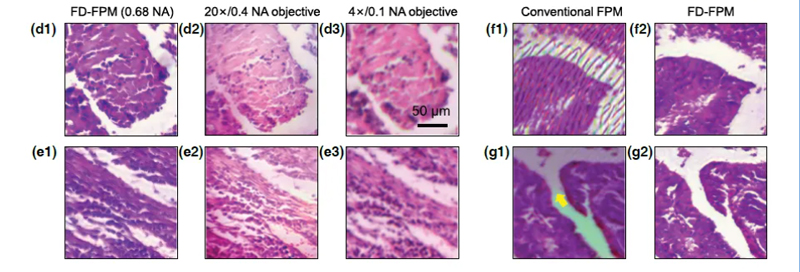
In the field of medical diagnostics, XG Instruments focuses on developing a "rapid ultra-depth digital pathology scanner," addressing two major challenges in pathological diagnosis, particularly during intraoperative consultations: uneven frozen sections and the tight time constraints for full-color digital imaging. The FPM technology achieves an ultra-depth of field of 300 microns and a near 4-second imaging time, representing a revolutionary breakthrough in pathological diagnosis.
Additionally, in the field of industrial inspection, XG Instruments has partnered with several listed companies to jointly promote the development of ultra-fast, high-content drug screening systems. The collaborative application for a major scientific instrument project from the Ministry of Science and Technology is expected to greatly improve the efficiency and accuracy of drug screening, injecting new momentum into pharmaceutical research and development.
For more information, please contact us at: https://powfo.cn/Contact.aspx?ClassID=9.